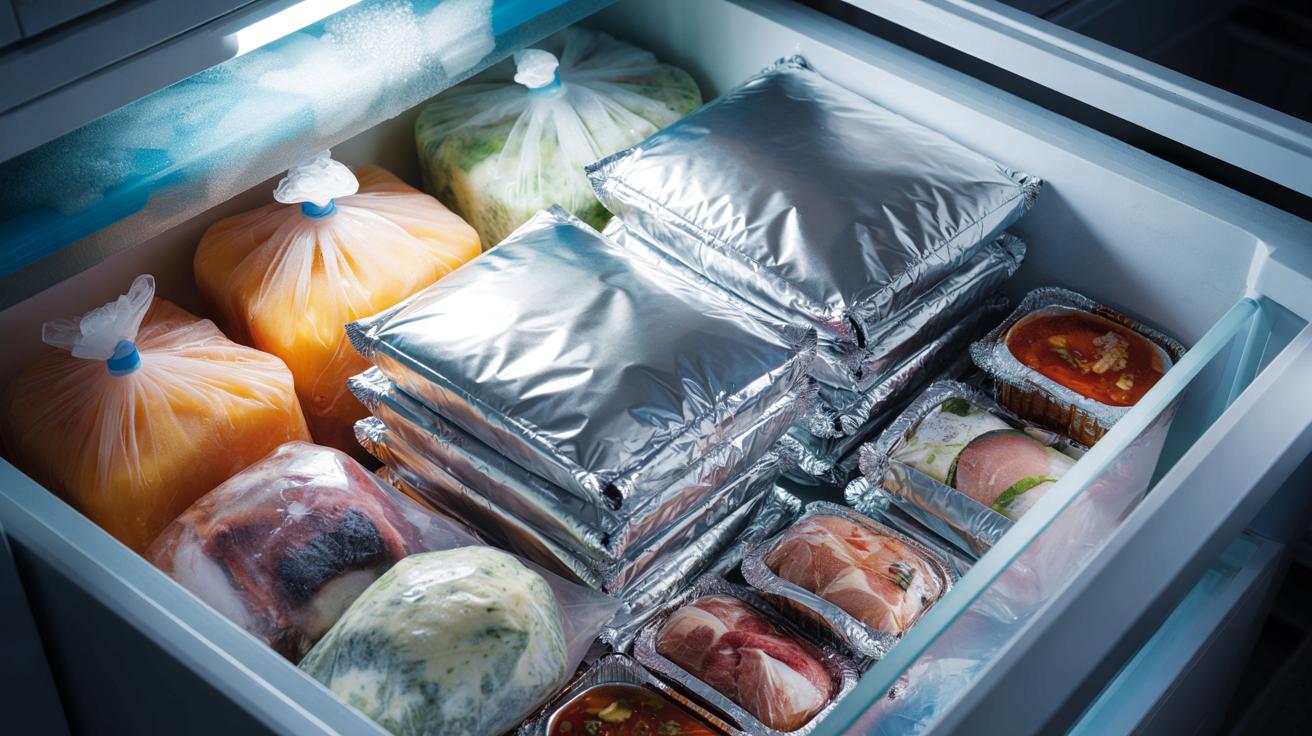
You open the freezer looking for dinner and are greeted by… chaos. Half-open bags of vegetables turned into frosty sculptures, a rock-hard block of lasagna in a giant plastic box, that mystery container you’re a bit afraid to sniff. The cold burns your fingers as you dig, the door alarm starts beeping, and you promise yourself you’ll “sort this out one day”. Then you slam the door and forget.
Lately, though, a small, shiny object has started to quietly change that story in a lot of kitchens.
A simple roll of aluminum foil. Used in a slightly different way.
Why aluminum foil is suddenly everywhere in our freezers
Open a modern freezer on social media and you’ll notice a pattern. Less bulky plastic boxes. Fewer mysterious ice-covered “bricks”. More flat, silver parcels, stacked like pages in a book. These aren’t leftovers abandoned for months. They’re organized portions, individually wrapped in aluminum foil, ready to be grabbed and cooked without drama.
This small shift looks cosmetic at first glance. It actually changes how we cook, waste food, and even how often we order takeout.
Take Laura, 37, two kids, full-time job. She used to freeze meals in recycled plastic tubs “to be responsible”. The result? Containers that never matched their lids, orange-stained from tomato sauce, hogging all the space. Half the time she didn’t know what was inside, so she’d end up cooking something new… and throwing away the old food months later.
One Sunday, after scrolling through a reel, she tried wrapping individual portions of bolognese in foil, laid them flat on a tray, then froze them. The next week, she slid a single flat packet out like a book from a shelf, peeled off the foil, and dinner basically made itself.
What changed? First, aluminum foil is thin. Food wrapped tightly in it freezes faster and more evenly. Fast freezing means fewer ice crystals, better texture, and less sad, mushy food. Then there’s the space factor: flat foil packets slide into every tiny gap in the freezer, where a rigid box just won’t go.
There’s also a psychological effect. A see-through box full of ice looks like work. A neatly labeled silver parcel feels like a small gift your past self left for you. That tiny difference is often what decides whether you cook what you have or tap that food delivery app again.
How to use aluminum foil in the freezer without ruining your food
The basic gesture is simple. Let the food cool to room temperature. Tear off a sheet of aluminum foil large enough to wrap it fully. Place your portion in the center, fold the sides snugly around it, then press out as much air as you can while sealing.
➡️ Excess rainfall could remake the Sahara and upset Africa’s fragile balance, study warns
➡️ Adopt a German Shepherd Dog Rescue Dog Lila « loving homes needed urgently »
➡️ Gardeners urged to act now for robins : the 3p kitchen staple you should put out this evening
For soups or sauces, first pour them into a freezer-safe bag, freeze them flat on a tray, then once they’re rock hard, wrap that frozen “tile” in foil. For meat or fish, wrap each piece separately so you can defrost only what you need. You get quick access, less waste, and food that doesn’t stick in one huge frozen clump.
This is where a lot of people slip: they rush. They wrap hot food, trap steam, and then complain their dishes come out dry or frosty. Or they use foil alone for very wet food, which leads to leaks and weird smells. The trick is to think “layers” rather than “magic sheet”.
A thin inner layer (like baking paper or a bag), then aluminum foil as the protective jacket. That way, the foil does its job: blocking light, limiting air contact, and keeping flavors protected. And yes, label the parcels with a marker. Let’s be honest: nobody really does this every single day. Yet the day you find three identical silver bricks and no clue what they are, you’ll bless that one time you grabbed a pen.
“The freezer used to be my food graveyard,” laughs Samir, 29. “Now it’s more like my emergency pantry. The foil packets feel like Level 2 adulting.”
- Freeze flat first
Spread foil-wrapped food or bagged portions on a baking tray so they freeze in a thin, even layer. You gain space and speed up defrosting. - Use a double layer for fatty or smelly foods
A first wrap (bag or paper), then foil. This keeps fish from perfuming your ice cream and stops grease from breaking down the foil. - Write three things on each packet
What it is, the quantity, and the date. That’s your built-in radar against forgotten, past-their-prime meals. - Combine with containers when needed
For delicate pastries or fragile dishes, freeze in a box, then, once solid, unmold, wrap in foil, and put back. Best of both worlds.
More than a hack: a different way of seeing your freezer
At first glance, this aluminum foil trick looks like yet another kitchen trend the internet will forget in a month. Then you notice what it changes in real life. Less food thrown away because it turned into an anonymous block of ice. Fewer nights where you say “there’s nothing to eat” even though the freezer is full. A little more control over portions when you’re cooking for one, two, or five.
*The freezer stops being a cold black hole at the back of your kitchen, and quietly becomes a tool that actually works with you.*
There’s also something oddly comforting about those silver packets. They signal that someone, maybe you on a calmer day, thought ahead to make your life easier later. We’ve all been there, that moment when you come home exhausted and the idea of cooking feels impossible. Reaching for a ready, home-cooked meal wrapped in foil doesn’t solve everything.
But it softens the day. It gives you back twenty minutes and a bit of energy for something else: talking to your kids, calling a friend, just sitting down in silence while the oven does the work.
Of course, this isn’t a perfect, universal solution. Aluminum has an environmental impact, and not every type of food loves direct contact with it. Some people will prefer glass, some will swear by vacuum bags. The plain truth: most of us juggle a mix of all three, according to our budget, our habits, and what’s clean at that moment.
What counts is the mindset behind the foil. A freezer that reflects your real life, instead of your fantasy life. One you can open without feeling guilty, where dinner is not a question mark but a series of small, visible, reachable decisions.
| Key point | Detail | Value for the reader |
|---|---|---|
| Flat foil parcels | Freeze portions in thin, flat shapes before stacking | Faster freezing and defrosting, huge space savings |
| Layered protection | Combine bags or paper with foil for liquids and strong smells | Better texture, fewer leaks, no “freezer smell” on everything |
| Label and date | Mark content, quantity, and freezing date on each packet | Less waste, easier meal planning, less decision fatigue |
FAQ:
- Question 1Can I put aluminum foil directly in the freezer without any container?
Yes, for solid foods like cooked meat, pastries, or firm leftovers, you can wrap them directly in foil. For liquids or very moist dishes, use a bag or tray first, then wrap the frozen block in foil.- Question 2Is aluminum foil safe for long-term freezing?
Foil is safe, but over many months it can get damaged or let in air. For more than three months, use a double layer or combine foil with a freezer bag to avoid freezer burn.- Question 3Can I freeze raw meat and fish in foil?
Yes, individually wrap each piece tightly, push out the air, and add an extra layer if the food is very fatty or strongly scented. That way, it keeps its flavor and doesn’t contaminate other foods.- Question 4Can I put foil-wrapped food directly in the oven?
If your oven is compatible, you can usually place foil-wrapped food straight in. Remove any plastic layer if you used one underneath, check for recommended temperatures, and open the foil toward the end to brown the food.- Question 5What should I avoid freezing in aluminum foil?
Very acidic foods like tomato sauce or citrus-based dishes are better in glass or bags, with foil only as an outer layer. Direct, long contact can slightly affect both the foil and the taste over time.